
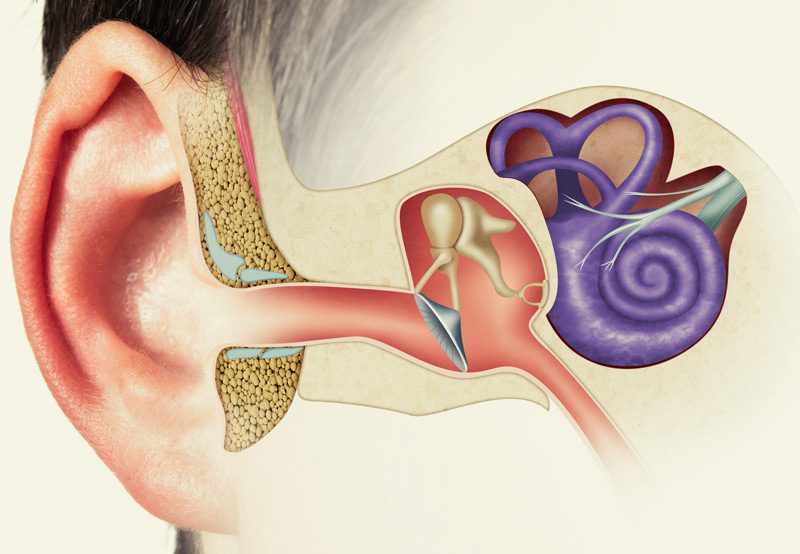

Stapedectomy and stapedotomy are delicate microsurgical procedures performed to treat hearing loss caused by otosclerosis, a condition in which abnormal bone growth around the stapes bone (one of the three tiny bones in the middle ear) prevents it from vibrating properly. These procedures aim to restore the transmission of sound vibrations from the middle ear to the inner ear, significantly improving hearing in many patients.
Understanding Otosclerosis and the Role of the Stapes
Otosclerosis causes the stapes to become fixed in place due to abnormal bone remodeling. Normally, the stapes moves freely to transmit sound from the eardrum through the middle ear to the cochlea in the inner ear. When the stapes is immobilized, this transmission is blocked, resulting in conductive hearing loss.

Surgical Approach: Stapedectomy vs. Stapedotomy
The choice between a stapedectomy and a stapedotomy depends on the surgeon’s preference and the patient’s specific anatomy:
- Stapedectomy: Involves the complete removal of the stapes bone and replacement with a prosthetic device (usually made of titanium or Teflon) that connects the incus (another middle ear bone) to the inner ear.
- Stapedotomy: A more commonly used modern technique in which only a small hole is made in the footplate of the stapes. A prosthesis is inserted through this hole to transmit sound vibrations, preserving more of the natural anatomy and reducing the risk of complications.
How the Procedure Is Performed
Both surgeries are typically performed under local or general anesthesia on an outpatient basis. The steps usually include:
- A small incision made in the ear canal or behind the ear
- Lifting the eardrum to expose the middle ear bones
- Removal or perforation of the stapes bone
- Placement of the prosthesis
- Repositioning the eardrum and closing the incision
The procedure usually takes 60–90 minutes, and patients can return home the same day.
Recovery and Outcomes
- Hearing Improvement: Most patients notice improved hearing within a few weeks, with full results typically evident in 6–8 weeks.
- Postoperative Care: Patients are advised to avoid nose-blowing, heavy lifting, or air travel for several weeks. Hearing should be protected from loud noises during healing.
- Follow-Up: Audiograms are used to assess improvements and monitor for any complications.
Risks and Complications
While generally safe and effective, these surgeries carry some risks including:
- Worsened hearing loss
- Tinnitus (ringing in the ears)
- Dizziness or imbalance (usually temporary)
- Taste disturbances
- Prosthesis displacement with need for revision surgery
- Facial nerve weakness or paralysis
When to Consider Stapedectomy or Stapedotomy
If you have been diagnosed with otosclerosis and experience progressive conductive hearing loss not improved with hearing aids, surgical intervention may be appropriate. An otologist or ENT specialist will perform detailed hearing tests and imaging studies to confirm the diagnosis and determine whether you’re a good candidate for surgery. These procedures often offer long-term hearing improvement and can significantly enhance quality of life.