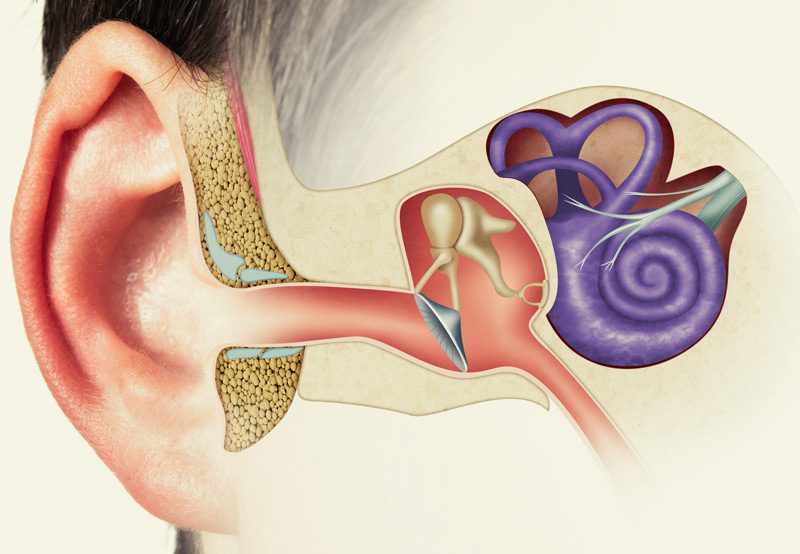
A mastoidectomy is a surgical procedure performed to remove infected air cells within the mastoid bone, which sits just behind the ear. This bone contains a honeycomb of air spaces that can become infected due to chronic ear infections or conditions like cholesteatoma. Left untreated, such infections may spread to surrounding structures, including the inner ear, facial nerve, or brain. Mastoidectomy is often necessary when medical management alone is not enough to resolve the problem.
Why a Mastoidectomy May Be Needed
Mastoidectomy is typically performed to treat:
- Chronic Otitis Media: Recurrent or persistent middle ear infections that extend into the mastoid bone.
- Cholesteatoma: A noncancerous growth of skin cells in the middle ear that can erode bone and spread into the mastoid.
- Mastoiditis: An acute infection of the mastoid bone, often arising from untreated or severe middle ear infections.
- Complications of Ear Infections: Such as hearing loss, vertigo, facial nerve weakness, or abscess formation.
- Access for Cochlear Implantation: A mastoidectomy is part of the approach to place cochlear implants or other ear devices.

Types of Mastoidectomy
The type of procedure depends on the extent of disease and the structures involved:
- Simple (Cortical) Mastoidectomy: Removes infected air cells without disturbing the middle ear structures.
- Modified Radical Mastoidectomy: Removes diseased mastoid air cells and parts of the middle ear while preserving hearing structures as much as possible.
- Radical Mastoidectomy: Removes the mastoid air cells along with most of the middle ear structures. Typically used in cases of extensive disease.
- Canal Wall Up vs. Canal Wall Down: These terms refer to whether the bony ear canal is preserved (up) or removed (down), which impacts healing time and the need for future maintenance.
The Procedure
Mastoidectomy is performed under general anesthesia and typically includes the following steps:
- An incision is made behind the ear to access the mastoid bone.
- The surgeon uses a high-speed drill to remove infected or damaged bone and air cells.
- If present, cholesteatoma or other abnormal tissue is removed.
- Depending on the disease, the surgeon may reconstruct parts of the middle ear or place a graft.
- A dressing is placed in the ear canal, and the incision is closed with sutures.
The surgery usually takes 2–5 hours, depending on the complexity.
Recovery and Follow-Up
- Pain and Swelling: Mild discomfort, swelling, or drainage is common and managed with pain medication and antibiotics.
- Hearing: Some patients may experience temporary hearing changes after surgery. In some cases, further procedures are needed to reconstruct hearing structures.
- Activity Restrictions: Patients are advised to avoid getting water in the ear, heavy lifting, or straining for a few weeks.
- Follow-Up Visits: Regular appointments are needed to remove packing, monitor healing, and assess hearing function. In canal wall down procedures, long-term cleaning of the cavity may be required.
Risks and Potential Complications
Mastoidectomy is generally safe, but as with any surgery, it carries risks:
- Hearing loss
- Dizziness or balance issues
- Facial weakness or paralysis
- Tinnitus (ringing in the ears)
- Recurrence of infection or cholesteatoma
- Tympanic membrane perforation
- Changes in taste
- Cerebrospinal fluid leak
When to See a Specialist
If you have chronic ear infections, persistent ear drainage, hearing loss, or have been diagnosed with cholesteatoma or mastoiditis, an otolaryngologist (ENT) can evaluate whether mastoidectomy is the appropriate treatment. Timely intervention can help preserve hearing and prevent serious complications.